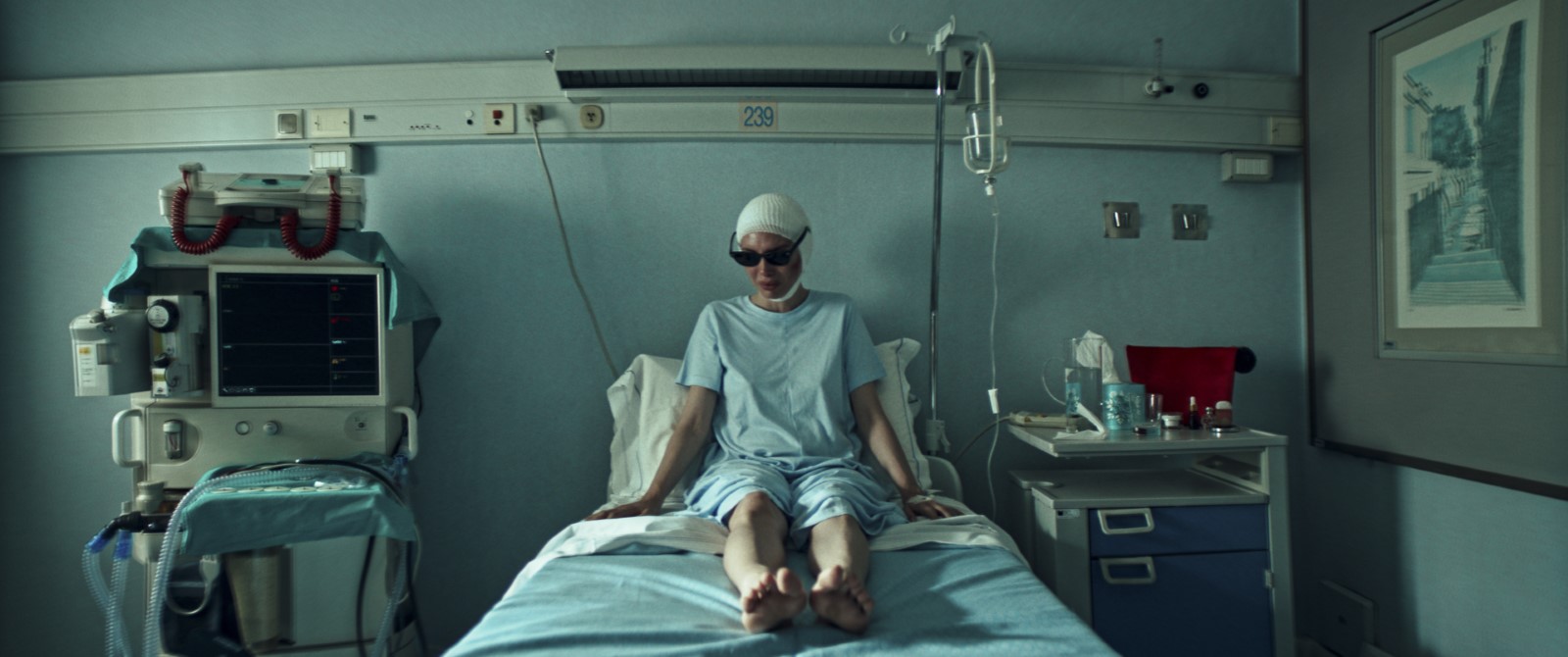
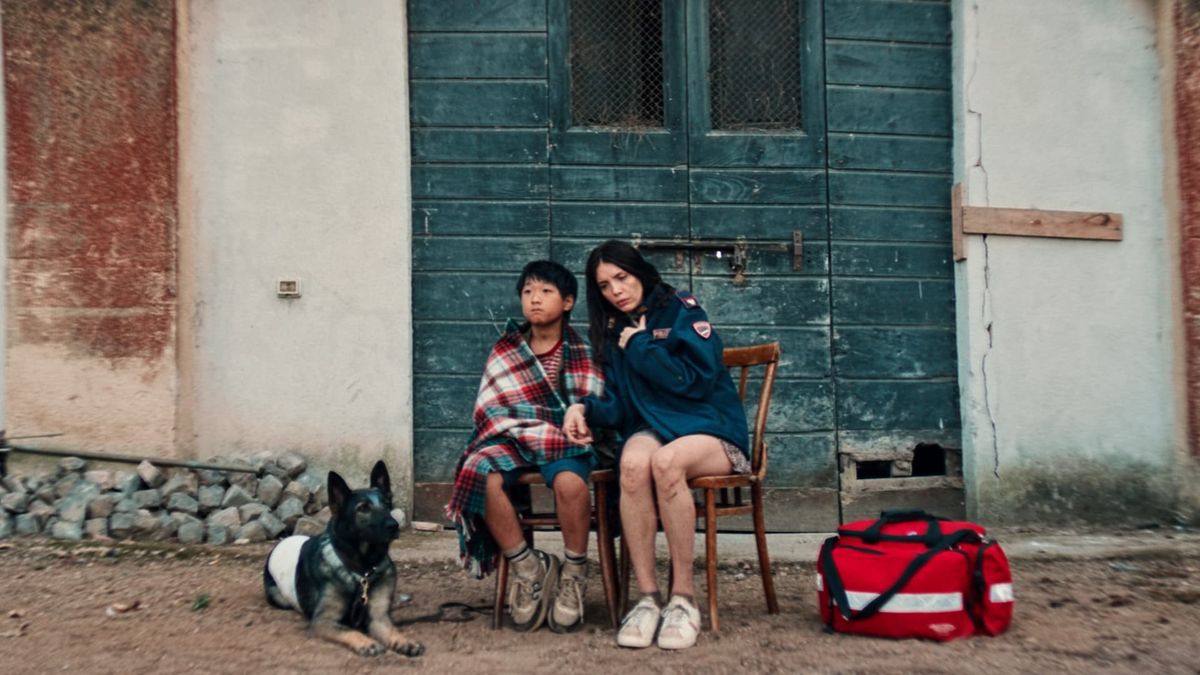
It was a good movie, but it felt like Dario Argento wanted to make another Dario Argento movie, little bit more modern, instead of just being him and making a movie, which would be a Dario Argento movie.
I see what you mean, but I appreciated the "modern" Dario Argento feel, especially the brisk pace/editing (unlike most of Argento's films are which are generally quite slow moving) and the more stripped-down story (little to no police investigation this time, we know the killer's face before the end, no plot twists). The more modern approach is perhaps also noticeable in that this time Argento is much more interested in the life of the main character (and the kid) than in the killer's point of view and his murders; the point of view is actually that of the victims. It's worth noting that the screenplay for DARK GLASSES was written in 2001/2002, Argento was supposed to direct it right after SLEEPL.ESS, but his producer at the time ran into legal problems, so the film couldn't be made in the early 2000s, and Argento then went on to direct another stripped down, low budget thriller, THE CARD PLAYER. I suppose Argento rewrote parts of the script for DARK GLASSES, updating it before directing it in 2021. I read, for example, that the killer's motive and weapon during the murders in the 2001/2002 script were different.
For the 2021 film, SPOILER ALERT!!!
Argento was inspired by a a prostitue killer from Brescia area who was a cocaine user and had been rejected by a prostitute. I also thought a bit about Asia Argento's story of being abused by Harvey Weinstein, with that sad scene near the beginning of the film where Diana/Illenia Pastorelli is assaulted by one of her clients.
The begining was very nice, when i read in the credits that Stivaletti is onboard i had to smile and the first 20min arey very cool.
The first 20 minutes (up to the car crash scene) are the most classically "giallo" part
SPOILERS
the nasty first murder with the victim dying in agony, bleeding out in front of a few witnesses, impressed me on the big screen, the eclipse scene is also very beautiful with the image splitting in two at one point when Diana is driving in Rome, and the amazing way Argento films the trees, the sky... the car chase scene and the car crash were also gripping on the big screen. Speaking of Stivaletti, the killer's death is also very graphic at the end! When he gets eaten by the dog, I was relieved and happy for Diana and Chin, haha! Rebotini's music is very good during this scene, as in the rest of the film.
The cinematography was fine but it was different, of course. Nothing to complain about but i noticed that they used lenses which almost in every shot made the focus unsharp in the corners and i think this was intentionally due to the equipment they used. Nowadays you get very nice looking results when using semi-pro digital equipment which good lenses, but it just lacks a bit of depht. No complaints just noticing.
I confess that when I saw the film in theaters I didn't pay much attention to that; in fact, I found the film visually beautiful and the framing/blocking elegant. Regarding the lenses, Argento and his cinematographer Matteo Cocco used anamorphic lenses; this is Argento's first film shot in anamorphic Cinemascope since TRAUMA in 1992.
Some of my favorite scenes/shots:
-the eclipse scene
-Diana unconscious and injured in her wrecked car, the smoke filling the frame
-Diana and Chin fleeing the apartment with police lights illuminating them and the corridors becoming increasingly narrow as they escape
-Diana walking alone in the countryside under the starry sky (probably an homage to "The Night of the Hunter")
-the illuminated sign in the countryside at night
-the ending: the overhead shot of Diana and her dog at the airport.
Also some b-movie like scenes to explain the story somehow, not very logical.
The use of short flashbacks towards the end was a bit odd, although I quite like the idea (illogical, therefore very Argento!) of the killer remembering spotting Asia in the restaurant when he sees her on the road.
There's also an aspect of DARK GLASSES that I appreciate: it has both the urban feel of Argento's giallo films (the first 45 minutes) and then it shifts to a rural, fairytale-like setting, the "PHENOMENA" feel, with the countryside at night, the smelly ogre/big bad wolf and his house, the hunters, the snakes, the moon... but I've read some viewers who preferred the first urban half of the film to its rural second half.